The Marathas and the Sringeri Incident (1791)
An examination of the 1791 sack of the Sringeri Sharada Peetham, the role of the Pindaris, and the response of the Maratha administration.
The Sringeri Sharada Peetham, established in the 8th century (around 800 CE) by the renowned philosopher Adi Shankaracharya, has long been one of the foremost centres of Advaita Vedanta in India. Owing to its religious and intellectual prominence, it attracted patronage from rulers belonging to different dynasties, regions, and sectarian traditions. Among its benefactors were the Veerashaiva Keladi Nayakas of Karnataka, the Maratha Peshwas, the Nizam of Hyderabad, and the rulers of Travancore. The official history of the Sringeri Sharada Peetham notes that these rulers respected the Jagadguru and regarded him as their spiritual preceptor.
The best-known episode connecting the Marathas with Sringeri is the sack of the monastery in 1791 during the Third Anglo-Mysore War. Contemporary correspondence and later historical studies indicate that the monastery was plundered by irregular Pindari and Lamani troops accompanying a Maratha campaign against Tipu Sultan, rather than by the regular Maratha army acting under an official order. The incident was subsequently condemned by the Maratha administration, which attempted to recover the stolen property and compensate the monastery.
Historical Background
During the eighteenth century, the Maratha Confederacy emerged as one of the dominant political powers in the Indian subcontinent. In southern India, its principal rival was the Kingdom of Mysore, first under Hyder Ali and later Tipu Sultan. Their rivalry centred on territorial control, tribute, and strategic influence in the Deccan and Karnataka.
The Third Anglo-Mysore War (1790–1792) brought together the Marathas, the Nizam of Hyderabad, and the British East India Company against Tipu Sultan. Maratha armies under Parashuram Bhau Patwardhan, Haripant Phadke, and Raghunath Rao Patwardhan advanced into Mysore territory and captured several forts during the campaign.
The Sack of Sringeri
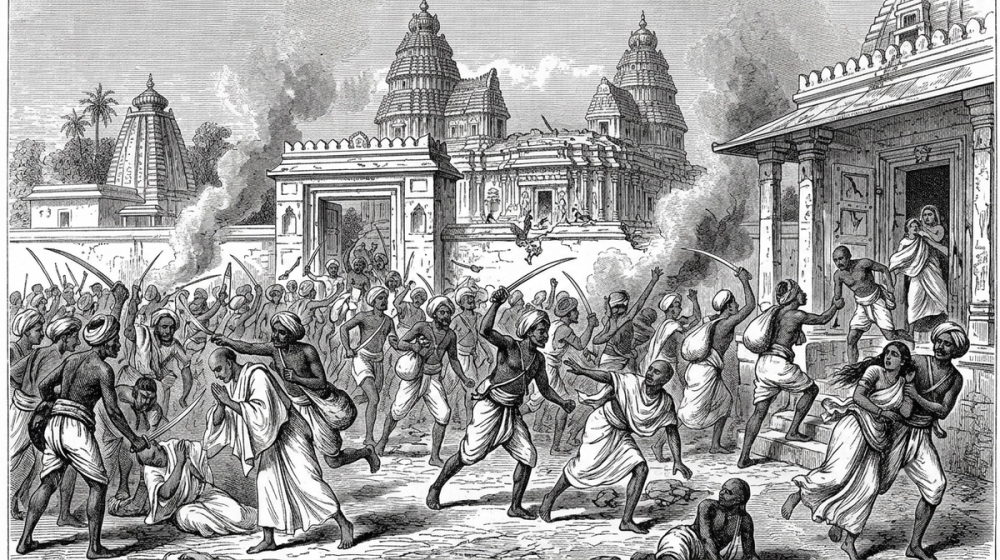
In the course of these military operations, the Sringeri Sharada Peetham was attacked and plundered in 1791. Contemporary Maratha correspondence consistently attributes the attack to Pindaris and Lamanis attached to the army rather than to the regular Maratha cavalry.
One of the earliest reports came from Neelkanth Appa, who informed Balasaheb at Miraj:
"Lamaanis and Pindaris from Dadasaheb's army went and looted lakhs worth from the Sringeri Math, including an elephant. I have written to Dada to confiscate the goods."
Another contemporary letter written by Trimbak Rao, the son of Raghunath Rao, provides a more detailed account:
"Before the army crossed the river Tunga, Lamaanis and Pindaris had reached Shimogga. They went and looted the Swami's Math at Sringeri. The danda and kamandalu of the Swami were taken. Nothing was left. Women were assaulted. Many women committed suicide. The elephant stable was emptied and brought by the Lamaanis."
These letters distinguish the irregular troops from the main Maratha force while recording the scale of the destruction inflicted upon the monastery.
The Pindaris
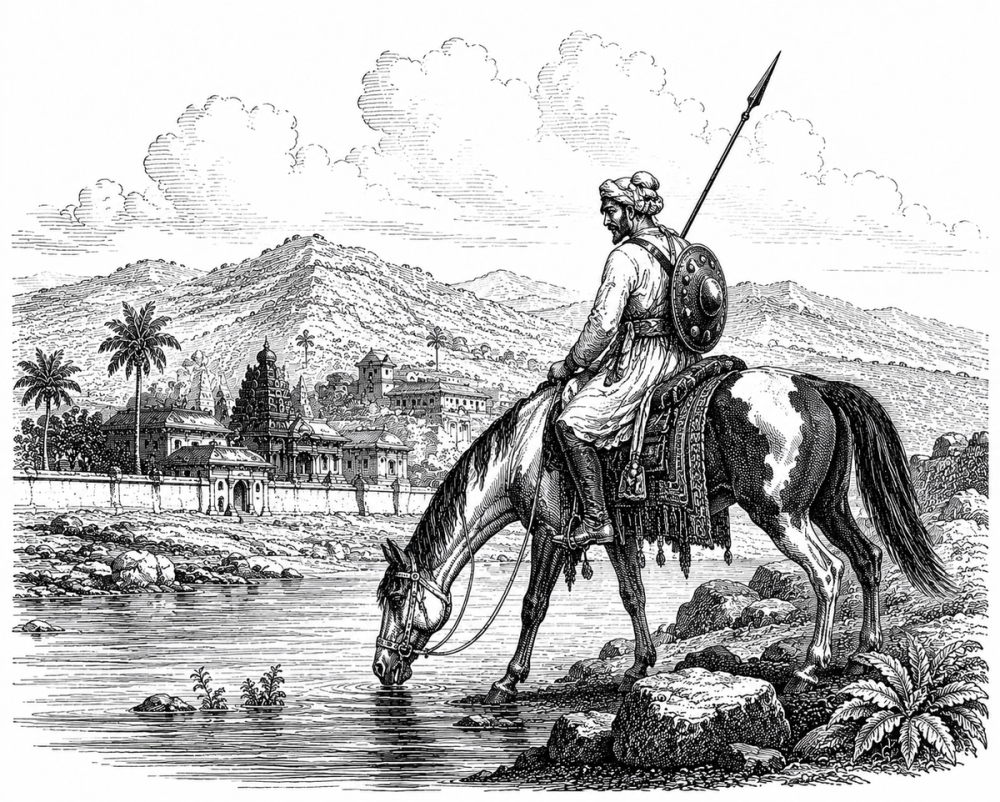
The Pindaris were irregular mounted auxiliaries employed by several Indian powers between the seventeenth and nineteenth centuries. Unlike the regular army, they received no fixed salary and generally maintained themselves through plunder. Their leaders and followers belonged to diverse communities and frequently shifted their allegiance according to military contracts.
Their principal functions included reconnaissance, disruption of communications, seizure of supplies, and harassment of retreating armies. Because they operated with considerable autonomy, they were often difficult for commanders to control. Contemporary British correspondence also records complaints that Pindari horse frequently acted "without any check or control."
Historian S. N. Sen, in The Military System of the Marathas, distinguishes these irregulars from the regular Maratha army:
"The picture may or may not have been overdrawn, but it should be remembered that the offenders were the Pendharis and the Purvias, and not Marathas. These mercenaries were responsible for the worst crimes associated with the Maratha name. It was they who plundered and defiled the Sarada temple of Shri Shankaracharya of Shringeri during Parashram Bhau Patwardhan's campaign against Tipu Sultan."
Sen further observes that these mercenary groups had previously served under the Mughals and that their indiscipline should not automatically be treated as official Maratha policy.
Response of the Maratha Administration
The attack was followed by correspondence between the Maratha government and its commanders concerning restitution.
Nana Fadnavis, the chief statesman of the Maratha Confederacy, instructed that the matter be investigated and the monastery compensated. His letter stated:
"The Swami's Math was looted and the Swami is therefore fasting. This does not auger well for the kingdom... Taking stern action, the Swami must be compensated and his pleasure solicited."
Subsequent correspondence records efforts to recover the monastery's elephant and other property, while several of the principal offenders were reportedly arrested. These actions indicate that the Maratha administration regarded the sack as a serious breach requiring redress.
Sringeri and Royal Patronage
The history of the Sringeri Sharada Peetham demonstrates that it enjoyed support from a wide range of Indian rulers irrespective of political or sectarian affiliation.
The Veerashaiva Keladi Nayakas, were among the important patrons of the monastery after the decline of the Vijayanagara Empire. Similarly, the Maratha Peshwas maintained relations with the Sringeri Jagadgurus and extended grants to the institution. The official history of the Peetham also records patronage from the Nizam of Hyderabad and the rulers of Travancore, reflecting Sringeri's position as a major religious centre respected across political boundaries.
Historical Assessment
The events at Sringeri occurred during a Maratha military campaign, and responsibility for maintaining discipline ultimately rested with the commanders. At the same time, the available contemporary evidence distinguishes the irregular Pindari and Lamani contingents from the regular Maratha army and does not indicate that the sack formed part of an official military directive.
The surviving letters of Neelkanth Appa, Trimbak Rao, and Nana Fadnavis, together with the later assessment of historian S. N. Sen, consistently portray the incident as the work of undisciplined irregular auxiliaries. The subsequent efforts to recover the looted property, compensate the monastery, and restore relations with the Sringeri Jagadguru further indicate that the Maratha administration did not regard the attack as a sanctioned act of state policy.
References
- S. N. Sen, The Military System of the Marathas.
- A. K. Shastry, A History of Sringeri.
- V. V. Khare, collections of Maratha correspondence relating to the Sringeri incident.
- Correspondence of Nana Fadnavis (1791–1792).
- Official publications of the Sringeri Sharada Peetham.